

Painting Tenders
More than Putting Paint on a Wall
Painting might look straightforward from the outside.
Prepare the surface. Apply the coating. Clean up. Job done.
But anyone who has tendered for a government, commercial or facilities maintenance painting contract knows there can be considerably more to demonstrate.
Clients may want to understand how you will manage occupied buildings, protect surrounding areas, schedule works around building users, control dust and fumes, select appropriate coating systems, maintain quality, manage defects, meet response times and deliver multiple jobs across multiple locations.
And somewhere amongst all of that, you still need to convince them that your business is the one they can trust to do the work properly.
That's where TenderWise comes in.
We help painting contractors turn practical experience, technical knowledge and proven ways of working into clear, persuasive tender responses.
You know painting. We know how to showcase your capability.
Painting Tender Writing for Contractors who know their Trade
A good painting tender isn't a catalogue of previous projects and a promise to provide quality workmanship.
Evaluators want evidence.
Depending on the contract, you may need to demonstrate your approach to:
Commercial and industrial painting.
Internal and external painting.
Surface preparation.
Protective coatings.
Repainting and maintenance programs.
Lead paint and hazardous material considerations.
Occupied and operational environments.
Working at heights.
Access equipment and scaffolding.
Product and coating selection.
Colour matching.
Substrate assessment.
Defect identification and rectification.
Environmental controls.
Waste and paint disposal.
Site protection and housekeeping.
Quality inspections.
Programming and scheduling.
Reactive maintenance.
Multi-site service delivery.
Reporting and record keeping.
TenderWise helps turn those individual activities into a coherent service delivery methodology that shows the evaluator how the work will actually happen.
Preparation is where Quality Starts
Anyone can write:
“All surfaces will be appropriately prepared before painting.”
The useful part is explaining what appropriately prepared actually means.
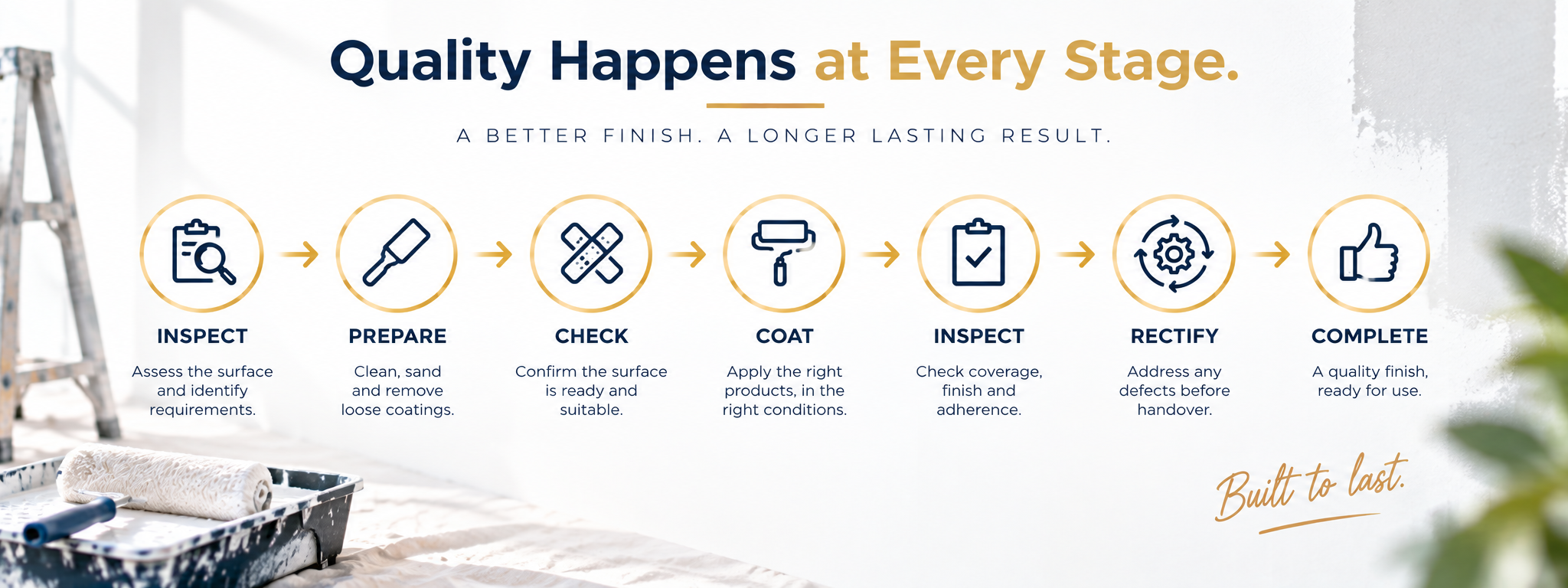
Surface preparation may involve inspection, cleaning, sanding, scraping, filling, patching, treating mould or corrosion, removing loose coatings, repairing minor defects and ensuring the substrate is suitable for the specified coating system.
The required preparation will depend on the surface, its condition, the existing coating and the environment.
A strong methodology explains how your team will assess the condition first, determine the appropriate preparation and verify that the surface is ready before coating begins.

Working around People without Getting in their Way
Many painting contracts aren't delivered on empty construction sites.
They happen in offices, schools, community facilities, public buildings, residential complexes, health facilities and operational workplaces.
People may still need to use the building while you're painting it.
That changes the methodology.
Your tender may need to explain how you will manage:
Staged work areas.
Restricted access.
Building occupants and visitors.
Noise and disruption.
Odours and ventilation.
Dust containment.
Furniture and equipment protection.
Wet surfaces.
Pedestrian movement.
After-hours work.
Daily clean-up.
Reopening areas safely.
We help demonstrate how you will fit the work around the client's operations, rather than expecting their operations to fit around you.

Protect what isn't Being Painted
Sometimes the difference between a good painting contractor and a very expensive headache is what doesn't end up covered in paint.
Floors. Furniture. Glass. Fixtures. Landscaping. Vehicles. Equipment. Adjacent finishes.
Protection of surrounding areas may sound like a small part of a tender response, but it tells the evaluator something important about the way you work.
A strong methodology can explain your approach to masking, drop sheets, temporary protection, exclusion zones, containment, daily housekeeping and final cleaning.
It demonstrates attention to detail before the first coat even goes on.
Quality isn't Something you Check at the End
Waiting until practical completion to discover a problem isn't much of a quality system.
Quality should be built into the work as it progresses.
Your tender might explain how supervisors inspect preparation, verify coating products, monitor application conditions, check coverage and finish, identify defects and ensure rectification occurs before an area is handed back.
Where records are required, these may include photographs, inspection checklists, product information, completed work orders and defect close-out records.
The objective is simple:
Get it right as the work progresses - not fix everything at the end.
Painting Maintenance Contracts need a Different Approach
A one-off painting project and a multi-year maintenance contract aren't the same thing.
Maintenance contracts can involve planned programs, individual work orders, urgent requests and multiple sites - sometimes all at once.
The evaluator may want to understand how you will:
Receive and prioritise work orders.
Inspect and scope individual jobs.
Schedule painters.
Coordinate access.
Meet response times.
Manage materials.
Track works in progress.
Record completed work.
Provide before-and-after photographs.
Manage defects and callbacks.
Report against KPIs.
Respond to changing priorities.
We help show the system behind the service, so your response demonstrates that you can manage the contract as well as perform the painting.
Your People are Part of the Tender
Painting contracts rely on skilled people who can work safely, efficiently and professionally - often in environments where they are highly visible to the client's staff, customers or community.
A tender may ask about:
Trade qualifications.
Licences and tickets.
Supervisory experience.
Working at heights competency.
Elevated work platform competency.
Police or background checks.
Working with children requirements.
Site inductions.
Product and manufacturer training.
WHS training.
Customer service expectations.
We can help present your proposed team in a way that demonstrates not only who they are, but why their experience is relevant to the contract.
Safety Needs to Match the Work
Generic statements about taking safety seriously aren't enough.
Painting can involve specific risks including working at heights, ladders, scaffolding, EWPs, hazardous substances, manual handling, occupied work areas, electrical hazards, slips and trips, and exposure to existing coatings or hazardous materials.
Your response should show that you've considered the risks associated with this work and this environment.
Depending on the tender, we can help develop or strengthen responses covering:
WHS management.
Risk assessment.
SWMS.
Working at heights.
Hazardous chemicals.
PPE.
Site isolation.
Public safety.
Incident management.
Emergency procedures.
Subcontractor management.
Training and competency.
The goal isn't to fill pages with safety jargon.
It's to demonstrate that you understand the work and know how to control its risks.
Environmental Management without the Green Waffle
Painting has genuine environmental considerations.
Clients may ask how you will manage paint waste, containers, wash water, solvents, packaging and other materials generated during the work.
They may also be interested in lower-VOC products, responsible product selection, waste reduction and recycling.
We help explain the practical things your business actually does, rather than filling the response with vague promises about “protecting the planet for future generations”.
If you recycle containers, minimise excess materials, prevent wash water entering stormwater, select lower-impact products where appropriate or dispose of hazardous materials through approved facilities - say so.
Specific beats fluffy every time.
Mobilisation: Getting Ready before the First Brush Comes Out
Winning the contract is one thing.
Being ready to deliver it is another.
Depending on the scope, mobilisation might include:
Contract kick-off meetings.
Site inspections.
Confirming key personnel.
Establishing communication protocols.
Staff inductions.
Work order system setup.
Confirming suppliers and products.
Equipment allocation.
Access arrangements.
Site-specific safety planning.
Reporting templates.
Program development.
Stakeholder notifications.
For larger or multi-site contracts, we can turn these activities into a clear mobilisation plan showing what will happen, who will do it and when it will be completed.
Government Painting Tenders
Government and Council painting contracts can range from individual refurbishment projects to long-term maintenance panels covering hundreds of buildings and facilities.
They can also come with substantial tender documentation.
TenderWise can help develop responses covering:
Relevant experience.
Organisational capability and capacity.
Service delivery methodology.
Key personnel.
Planned and reactive maintenance.
Work order management.
Response times.
WHS.
Quality management.
Environmental management.
Risk management.
Mobilisation.
Business continuity.
Contract management.
KPIs and reporting.
Subcontractor management.
Social procurement.
Local participation.
Sustainability.
Value for money.
Continuous improvement.
We work through the tender documents to identify what the particular buyer is actually asking for, then help you respond to it clearly.
Not what the last council asked.
Not what AI thinks councils usually ask.
What this tender asks.
Already Written your Painting Tender?
We Can Review It Before You Submit
If you've already prepared the response, TenderWise can provide an independent tender review before lodgement.
We'll look for things such as:
Questions that haven't actually been answered.
Requirements hidden elsewhere in the tender documents.
Generic responses that could apply to any painting contractor.
Claims that need supporting evidence.
Weak or incomplete methodologies.
Inconsistent information.
Missing attachments.
Compliance issues.
Opportunities to demonstrate your capability more clearly.
Presentation and readability.
Sometimes you don't need someone to rewrite the tender.
You just need someone who knows what to look for to give it a proper forensic once-over before it leaves the building.
Your Experience Deserves more than a Generic Tender
You may have spent years building a team, refining your processes, developing relationships with suppliers and learning how to deliver painting projects without disrupting your clients.
That knowledge is valuable.
But an evaluator can only assess what makes it into the submission.
TenderWise helps draw that knowledge out of your business and turn it into a response that shows how you work, why it works and what that means for the client.
No generic waffle.
No invented capability.
Just a clearer story about what your business can genuinely deliver.
Need Help With a Painting Tender?
Whether you're tendering for a one-off painting project, a government panel, commercial repainting works or a long-term facilities maintenance contract, we can help.
Your trade. Your experience. Your capability - presented properly.
Clarity. Confidence. Capability. Let's do this!